


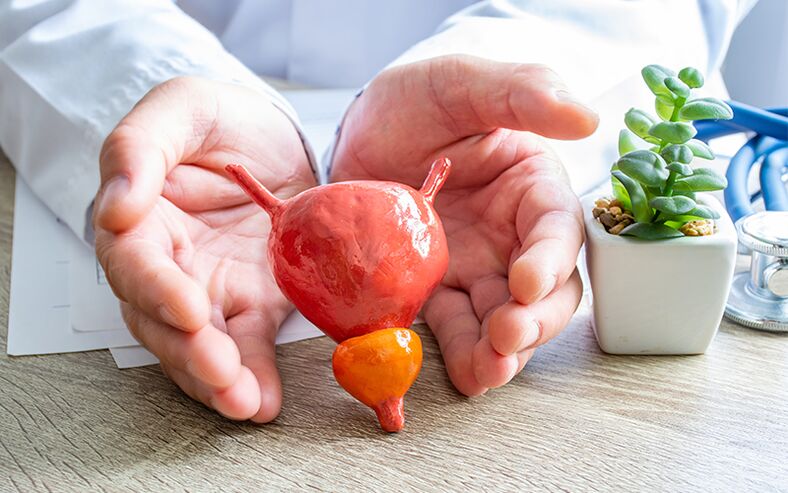
In men, prostatitis is an inflammatory process involving the prostate tissue.The disease is accompanied by pain in the lower back, perineum and pelvis.The main manifestations are pain in the perineum and dysfunction of the lower urinary tract.
Among all urological diseases, urologists encounter prostatitis the most.It can develop unexpectedly (acute) against the background of general health, or it can last for a long time, showing a chronic course with periods of exacerbation and remission.Moreover, the second variant of the disease is diagnosed more often.
The disease can be independent, and can also be combined with prostate hyperplasia or prostate cancer.
Reasons for development
Inflammation does not appear by itself.The causes of prostatitis can be divided into bacterial and non-bacterial.
The acute infectious variant usually occurs as a result of damage to the prostate gland by gram-negative bacteria - Escherichia coli, Proteus, Enterobacter in men under the age of 35.Inflammation also occurs due to infection with sexually transmitted infections - gonorrhea, chlamydia.In the chronic form, there may be more causes, and the list will include atypical microbes.
Inciting factors for the development of the bacterial variant are:
- unprotected sex;
- AIDS or HIV infection;
- diarrhea or constipation;
- anal intercourse;
- sedentary lifestyle;
- inactive sex life;
- diabetes mellitus;
- hypothermia;
- intimate hygiene violations.
In the chronic form, non-infectious prostatitis is detected in men who complain of pain in the genitals for a long time, but the tests do not diagnose the bacteria that can cause the inflammation.
The exact cause of the development of this type of prostatitis has not been studied, but the following are considered inciting factors:
- emotional disorders;
- autoimmune diseases;
- increased physical activity;
- lack of regular sex life;
- work related to lifting heavy loads;
- chronic stress;
- congestion in prostate tissues;
- previously confirmed fibrotic changes in the prostate (according to TRUS results).
Inactive sex life, unprotected sex and hypothermia are believed to play a major role in the onset of the disease.Symptoms of prostatitis are experienced by 50% of the entire male population of the planet at least once in their life.
Symptoms of acute prostatitis
Acute prostatitis occurs in several stages, if you do not consult a specialist and stop the development of the disease in time, it will pass from one to another.
The first stage is called acute catarrhal prostatitis.It often begins with complaints of painful urination.In the lower back and sacrum, as well as in the perineum, a slight pain appears at first, which increases rapidly.
Without treatment, the second stage occurs - acute follicular.At this moment, the pain is particularly strong, radiating to the anus and intensifying during defecation.Urination is very difficult, sometimes there is acute urinary retention.The temperature does not exceed 38 degrees and can be higher only in rare cases.
Acute parenchymal prostatitis is expressed by severe intoxication, the temperature reaches 38 ° C and above, and tremors appear.Urinary retention is often observed, sharp, throbbing pain appears in the perineum, defecation becomes difficult.
Symptoms of chronic prostatitis
Sometimes chronic prostatitis occurs against the background of an acute inflammatory process.This is a separate disease with a main chronic course that develops over a long period of time.
Often, the chronic course begins as a complication of the inflammatory process caused by various infectious agents - chlamydia, trichomonas, gonococcus.However, live manifestations are very rare;more often, the disease occurs during urination or with small pain in the perineum and light discharge from the urethra.Often these manifestations are even ignored by the patient for a very long time.
Symptoms of prostatitis in men can occur in different ways, but they are all grouped into three groups - pain, urinary disorders, and problems with sexual activity.Prostate tissue does not have receptors and therefore cannot produce painful sensations.They appear when the inflammation begins to spread to the pelvic organs, which are abundantly innervated.Patients' pain can range from mild discomfort to severe and intense pain that disrupts sleep and normal lifestyle.Pain can spread to the sacrum, scrotum, lower back, perineum, so self-diagnosis is useless here.
Urinary problems begin when the volume of the prostate increases and the lumen of the urethra decreases, when it begins to squeeze the urethra.There is a frequent urge to urinate, a feeling of incomplete emptying of the bladder.Typically, such phenomena are expressed at the very beginning, early stages of the disease, then compensated by the body, but appear again at a later stage, without adequate treatment.
Potential problems in men can also be expressed in different ways.Patients complain of deterioration of erection, acceleration of ejaculation and decrease in sexual arousal.Gradually, sexual dysfunctions become more pronounced, and in the advanced stage, the symptoms of prostatitis are complemented by impotence.
Possible complications
During inflammatory processes in the prostate gland, neighboring organs are also involved in the pathological process.This can lead to various consequences of prostatitis, such as:
- vesiculitis;
- posterior urethritis or colliculitis;
- abscess of the gland itself;
- sclerosis or fibrosis of the prostate;
- prostate cysts and stones;
- infinity;
- violation of ejaculation;
- erectile dysfunction.
To prevent the development of these serious complications, you should consult a urologist at the first signs of prostatitis and prostate adenoma.
Diagnostics
Diagnosis and treatment of any form of prostatitis is carried out by a urologist.If a tumor is suspected, the patient may be referred to an oncologist.In case of chronic long-term prostatitis, which is difficult to treat, consultation of an immunologist may be required.
A characteristic clinical picture and patient complaints help to make an accurate diagnosis quickly.The list of mandatory studies when diagnosing prostatitis looks like this:
- Bacteriological culture of urine.
- Analysis of prostate secretion for microflora and sensitivity to antibiotics.
- Rectal examination of the prostate.
- Ultrasound of the prostate gland allows to identify tumors, cysts, adenomas, as well as distinguish prostatitis from other urological and surgical diseases.
- Spermogram to rule out infertility.
It is difficult to independently determine the causes of the disease, much less treat them.Therefore, in order to prevent the development of serious complications and to avoid infertility in the future, a man should immediately consult a urologist at the first signs of the disease.
Treatment
Patients diagnosed with uncomplicated acute prostatitis are treated on an outpatient basis.Hospitalization is carried out only with signs of severe intoxication and suspicion of a purulent process.
Antibiotics are the drugs of choice to fight inflammation.They are also used for chronic bacterial forms.The drug is selected individually and is taken in a course of 4-6 weeks.In severe cases, antibacterial agents are administered intravenously, in all other cases - orally, in the form of capsules or tablets.
Another drug used for prostatitis is alpha1-blockers, which are prescribed in the presence of residual urine confirmed by ultrasound.They help facilitate urination, relax the muscles of the prostate and bladder.Drugs from the NSAID group help relieve pain.
Treatment of prostatitis is carried out only comprehensively and consistently.In addition to taking medication, the doctor will prescribe a course of prostate massage, and physiotherapy is applied to improve blood circulation in this organ.Surgical treatment is used only when abscesses and suppuration of seminal vesicles appear.
Prognosis and prevention
Without treatment, the acute form often becomes chronic, which periodically worsens.Complete recovery is not always possible, but if you consult a doctor in time and take all prescribed medications, you can eliminate anxiety, urinary and pain problems.
Self-treatment at home and the use of traditional methods can often be life-threatening.
To prevent prostatitis, it is recommended to avoid hypothermia, empty the bladder in time, limit the consumption of coffee, spices and alcohol and remain sexually active as long as possible.